本文介绍讯飞学术论文分类挑战赛的Paddle版本Baseline,提交分数0.8+。赛题为英文长文本分类,含5W篇训练论文(带类别)和1W篇测试论文(需预测类别)。Baseline基于PaddleHub预训练模型微调,包括数据读取处理(拼接标题和摘要等)、模型构建(选ernie_v2_eng_large等)、训练验证及预测提交等步骤,可优化空间大。
☞☞☞AI 智能聊天, 问答助手, AI 智能搜索, 免费无限量使用 DeepSeek R1 模型☜☜☜

1.项目简介:
本项目为讯飞赛题-学术论文分类挑战赛paddle版本Baseline,提交分数0.8+。目前可优化的空间还比较大,可以多做尝试进行提升。感兴趣的也可以进行迁移用到类似的文本分类项目中去。
2.赛事地址:(详情可前往具体比赛页面查看)
学术论文分类挑战赛
3.赛题任务简介:
该赛题为一道较常规的英文长文本分类赛题。其中训练集5W篇论文。其中每篇论文都包含论文id、标题、摘要和类别四个字段。测试集1W篇论文。其中每篇论文都包含论文id、标题、摘要,不包含论文类别字段。选手需要利用论文信息:论文id、标题、摘要,划分论文具体类别。同时一篇论文只属于一个类别,并不存在一篇论文属于多个类别的复杂情况。评价标准采用准确率指标,需特别注意赛题规定不可使用除提供的数据外的其它数据。
4.Baseline思路:
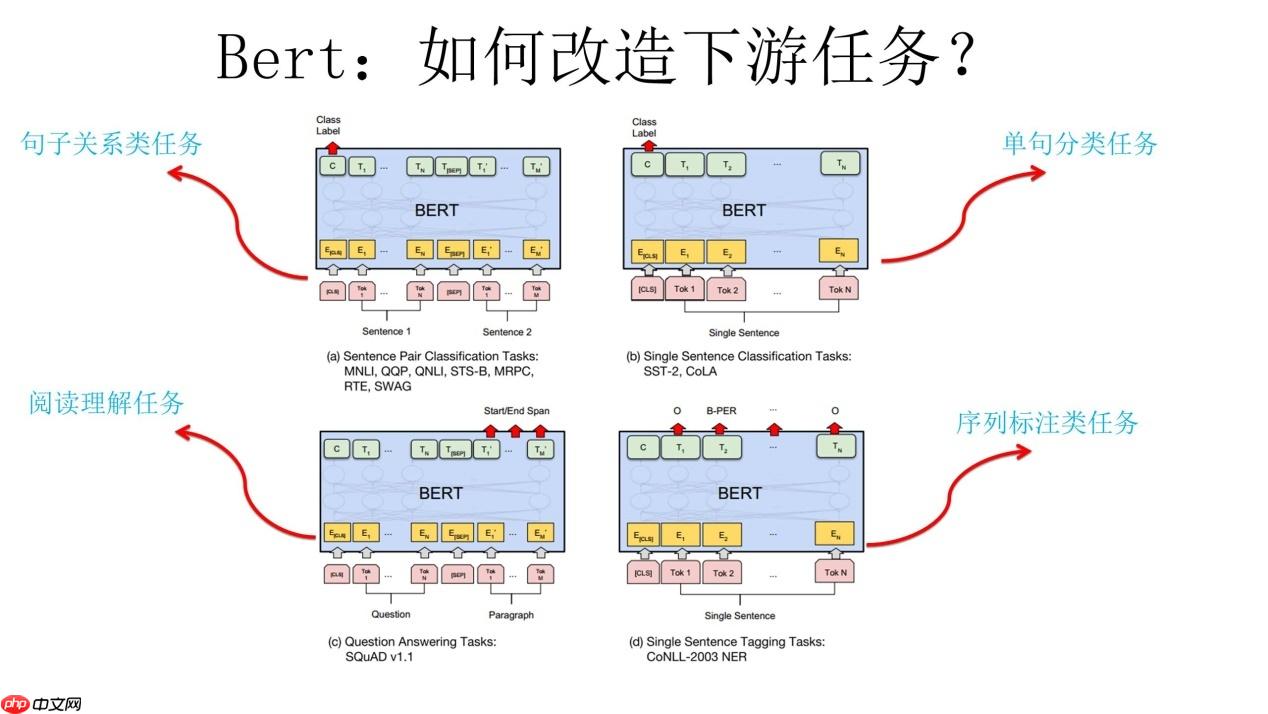
本次Baseline主要基于PaddleHub通过预训练模型在比赛数据集上的微调完成论文文本分类模型训练,最终对测试数据集进行预测并导出提交结果文件完成赛题任务。需注意本项目代码需要使用GPU环境来运行,若显存不足,请改小batchsize。
 简小派
简小派
简小派是一款AI原生求职工具,通过简历优化、岗位匹配、项目生成、模拟面试与智能投递,全链路提升求职成功率,帮助普通人更快拿到更好的 offer。
 123
查看详情
123
查看详情

比赛相关数据集已经上传AI Studio,在数据集那搜索‘讯飞赛题-学术论文分类挑战赛数据集’后添加即可。

# 解压比赛数据集%cd /home/aistudio/data/data100192/
!unzip data.zip
/home/aistudio/data/data100192
Archive:  data.zip
  inflating: sample_submit.csv
  inflating: test.csv
  inflating: train.csv
In [ ]
# 读取数据集import pandas as pd
train = pd.read_csv('train.csv', sep='\t')  # 有标签的训练数据文件test = pd.read_csv('test.csv', sep='\t')    # 要进行预测的测试数据文件sub = pd.read_csv('sample_submit.csv')      # 提交结果文件范例
In [ ]
# 查看训练数据前5条train.head()
       paperid                                              title  \
0  train_00000  Hard but Robust, Easy but Sensitive: How Encod...
1  train_00001  An Easy-to-use Real-world Multi-objective Opti...
2  train_00002  Exploration of reproducibility issues in scien...
3  train_00003                Scheduled Sampling for Transformers
4  train_00004  Hybrid Forests for Left Ventricle Segmentation...

                                            abstract categories
0    Neural machine translation (NMT) typically a...      cs.CL
1    Although synthetic test problems are widely ...      cs.NE
2    This is the first part of a small-scale expl...      cs.DL
3    Scheduled sampling is a technique for *oidi...      cs.CL
4    Machine learning models produce state-of-the...      cs.CV
In [ ]
# 查看训练数据文件信息train.info()
<class 'pandas.core.frame.DataFrame'>
RangeIndex: 50000 entries, 0 to 49999
Data columns (total 4 columns):
 #   Column      Non-Null Count  Dtype
---  ------      --------------  -----
 0   paperid     50000 non-null  object
 1   title       50000 non-null  object
 2   abstract    50000 non-null  object
 3   categories  50000 non-null  object
dtypes: object(4)
memory usage: 1.5+ MB
In [ ]
# 查看训练数据中总类别分布情况train['categories'].value_counts()
cs.CV    11038
cs.CL     4260
cs.NI     3218
cs.CR     2798
cs.AI     2706
cs.DS     2509
cs.DC     1994
cs.SE     1940
cs.RO     1884
cs.LO     1741
cs.LG     1352
cs.SY     1292
cs.CY     1228
cs.DB      998
cs.GT      984
cs.HC      943
cs.PL      841
cs.IR      770
cs.CC      719
cs.NE      704
cs.CG      683
cs.OH      677
cs.SI      603
cs.DL      537
cs.DM      523
cs.FL      469
cs.AR      363
cs.CE      362
cs.GR      314
cs.MM      261
cs.ET      230
cs.MA      210
cs.NA      176
cs.SC      172
cs.SD      140
cs.PF      139
cs.MS      105
cs.OS       99
cs.GL       18
Name: categories, dtype: int64
In [ ]
# 查看要进行预测的测试数据前5条test.head()
      paperid                                              title  \
0  test_00000  Analyzing 2.3 Million M*en Dependencies to Re...
1  test_00001  Finding Higher Order Mutants Using Variational...
2  test_00002  Automatic Detection of Search Tactic in Indivi...
3  test_00003  Polygon Simplification by Minimizing Convex Co...
4  test_00004  Differentially passive circuits that switch an...

                                            abstract
0    This paper addresses the following question:...
1    Mutation testing is an effective but time co...
2    Information seeking process is an important ...
3    Let $P$ be a polygon with $r>0$ reflex verti...
4    The concept of passivity is central to analy...
In [ ]
# 查看测试数据文件信息test.info()
<class 'pandas.core.frame.DataFrame'>
RangeIndex: 10000 entries, 0 to 9999
Data columns (total 3 columns):
 #   Column    Non-Null Count  Dtype
---  ------    --------------  -----
 0   paperid   10000 non-null  object
 1   title     10000 non-null  object
 2   abstract  10000 non-null  object
dtypes: object(3)
memory usage: 234.5+ KB
# 对数据集进行处理,拼接论文标题和摘要,处理为text_a,label格式train['text_a'] = train['title'] + ' ' + train['abstract']
test['text_a'] = test['title'] + ' ' + test['abstract']
train['label'] = train['categories']
train = train[['text_a', 'label']]
In [ ]
# 查看处理后的数据前5条,看是否符合text_a,label格式train.head()
                                              text_a  label
0  Hard but Robust, Easy but Sensitive: How Encod...  cs.CL
1  An Easy-to-use Real-world Multi-objective Opti...  cs.NE
2  Exploration of reproducibility issues in scien...  cs.DL
3  Scheduled Sampling for Transformers   Schedule...  cs.CL
4  Hybrid Forests for Left Ventricle Segmentation...  cs.CV
In [ ]
# 划分训练和验证集:# 将50000条有标签的训练数据直接根据索引按9:1划分为训练和验证集train_data = train[['text_a', 'label']][:45000]
valid_data = train[['text_a', 'label']][45000:]# 对数据进行随机打乱from sklearn.utils import shuffle
train_data = shuffle(train_data)
valid_data = shuffle(valid_data)# 保存训练和验证集文件train_data.to_csv('train_data.csv', sep='\t', index=False)
valid_data.to_csv('valid_data.csv', sep='\t', index=False)
PaddleHub可以便捷地获取PaddlePaddle生态下的预训练模型,完成模型的管理和一键预测。配合使用Fine-tune API,可以基于大规模预训练模型快速完成迁移学习,让预训练模型能更好地服务于用户特定场景的应用。
# 下载最新版本的paddlehub!pip install -U paddlehub -i https://pypi.tuna.tsinghua.edu.cn/simpleIn [ ]
# 导入paddlehub和paddle包import paddlehub as hubimport paddle
# 设置要求进行论文分类的39个类别label_list=list(train.label.unique())print(label_list)
label_map = {
    idx: label_text for idx, label_text in enumerate(label_list)
}print(label_map)
['cs.CL', 'cs.NE', 'cs.DL', 'cs.CV', 'cs.LG', 'cs.DS', 'cs.IR', 'cs.RO', 'cs.DM', 'cs.CR', 'cs.AR', 'cs.NI', 'cs.AI', 'cs.SE', 'cs.CG', 'cs.LO', 'cs.SY', 'cs.GR', 'cs.PL', 'cs.SI', 'cs.OH', 'cs.HC', 'cs.MA', 'cs.GT', 'cs.ET', 'cs.FL', 'cs.CC', 'cs.DB', 'cs.DC', 'cs.CY', 'cs.CE', 'cs.MM', 'cs.NA', 'cs.PF', 'cs.OS', 'cs.SD', 'cs.SC', 'cs.MS', 'cs.GL']
{0: 'cs.CL', 1: 'cs.NE', 2: 'cs.DL', 3: 'cs.CV', 4: 'cs.LG', 5: 'cs.DS', 6: 'cs.IR', 7: 'cs.RO', 8: 'cs.DM', 9: 'cs.CR', 10: 'cs.AR', 11: 'cs.NI', 12: 'cs.AI', 13: 'cs.SE', 14: 'cs.CG', 15: 'cs.LO', 16: 'cs.SY', 17: 'cs.GR', 18: 'cs.PL', 19: 'cs.SI', 20: 'cs.OH', 21: 'cs.HC', 22: 'cs.MA', 23: 'cs.GT', 24: 'cs.ET', 25: 'cs.FL', 26: 'cs.CC', 27: 'cs.DB', 28: 'cs.DC', 29: 'cs.CY', 30: 'cs.CE', 31: 'cs.MM', 32: 'cs.NA', 33: 'cs.PF', 34: 'cs.OS', 35: 'cs.SD', 36: 'cs.SC', 37: 'cs.MS', 38: 'cs.GL'}
In [ ]
# 选择ernie_v2_eng_large预训练模型并设置微调任务为39分类任务model = hub.Module(name="ernie_v2_eng_large", task='seq-cls', num_classes=39, label_map=label_map) # 在多分类任务中,num_classes需要显式地指定类别数,此处根据数据集设置为39
Download https://bj.bcebos.com/paddlehub/paddlehub_dev/ernie_v2_eng_large_2.0.2.tar.gz
[##################################################] 100.00%
Decompress /home/aistudio/.paddlehub/tmp/tmp8enjb395/ernie_v2_eng_large_2.0.2.tar.gz
[##################################################] 100.00%
[2025-08-01 17:43:16,200] [    INFO] - Successfully installed ernie_v2_eng_large-2.0.2
[2025-08-01 17:43:16,203] [    INFO] - Downloading https://paddlenlp.bj.bcebos.com/models/transformers/ernie_v2_large/ernie_v2_eng_large.pdparams and s*ed to /home/aistudio/.paddlenlp/models/ernie-2.0-large-en
[2025-08-01 17:43:16,205] [    INFO] - Downloading ernie_v2_eng_large.pdparams from https://paddlenlp.bj.bcebos.com/models/transformers/ernie_v2_large/ernie_v2_eng_large.pdparams
100%|██████████| 1309198/1309198 [00:19<00:00, 68253.50it/s]
/opt/conda/envs/python35-paddle120-env/lib/python3.7/site-packages/paddle/fluid/dygraph/layers.py:1297: UserWarning: Skip loading for classifier.weight. classifier.weight is not found in the provided dict.
  warnings.warn(("Skip loading for {}. ".format(key) + str(err)))
/opt/conda/envs/python35-paddle120-env/lib/python3.7/site-packages/paddle/fluid/dygraph/layers.py:1297: UserWarning: Skip loading for classifier.bias. classifier.bias is not found in the provided dict.
  warnings.warn(("Skip loading for {}. ".format(key) + str(err)))
hub.Module的参数用法如下:
PaddleHub还提供BERT等模型可供选择, 当前支持文本分类任务的模型对应的加载示例如下:
| 模型名 | PaddleHub Module |
|---|---|
| ERNIE, Chinese | hub.Module(name='ernie') |
| ERNIE tiny, Chinese | hub.Module(name='ernie_tiny') |
| ERNIE 2.0 Base, English | hub.Module(name='ernie_v2_eng_base') |
| ERNIE 2.0 Large, English | hub.Module(name='ernie_v2_eng_large') |
| BERT-Base, English Cased | hub.Module(name='bert-base-cased') |
| BERT-Base, English Uncased | hub.Module(name='bert-base-uncased') |
| BERT-Large, English Cased | hub.Module(name='bert-large-cased') |
| BERT-Large, English Uncased | hub.Module(name='bert-large-uncased') |
| BERT-Base, Multilingual Cased | hub.Module(nane='bert-base-multilingual-cased') |
| BERT-Base, Multilingual Uncased | hub.Module(nane='bert-base-multilingual-uncased') |
| BERT-Base, Chinese | hub.Module(name='bert-base-chinese') |
| BERT-wwm, Chinese | hub.Module(name='chinese-bert-wwm') |
| BERT-wwm-ext, Chinese | hub.Module(name='chinese-bert-wwm-ext') |
| RoBERTa-wwm-ext, Chinese | hub.Module(name='roberta-wwm-ext') |
| RoBERTa-wwm-ext-large, Chinese | hub.Module(name='roberta-wwm-ext-large') |
| RBT3, Chinese | hub.Module(name='rbt3') |
| RBTL3, Chinese | hub.Module(name='rbtl3') |
| ELECTRA-Small, English | hub.Module(name='electra-small') |
| ELECTRA-Base, English | hub.Module(name='electra-base') |
| ELECTRA-Large, English | hub.Module(name='electra-large') |
| ELECTRA-Base, Chinese | hub.Module(name='chinese-electra-base') |
| ELECTRA-Small, Chinese | hub.Module(name='chinese-electra-small') |
通过以上的一行代码,model初始化为一个适用于文本分类任务的模型,为ERNIE的预训练模型后拼接上一个全连接网络(Full Connected)。
# 统计数据的长度,便于确定max_seq_lenprint('训练数据集拼接后的标题和摘要的最大长度为{}'.format(train['text_a'].map(lambda x:len(x)).max()))print('训练数据集拼接后的标题和摘要的最小长度为{}'.format(train['text_a'].map(lambda x:len(x)).min()))print('训练数据集拼接后的标题和摘要的平均长度为{}'.format(train['text_a'].map(lambda x:len(x)).mean()))print('测试数据集拼接后的标题和摘要的最大长度为{}'.format(test['text_a'].map(lambda x:len(x)).max()))print('测试数据集拼接后的标题和摘要的最小长度为{}'.format(test['text_a'].map(lambda x:len(x)).min()))print('测试数据集拼接后的标题和摘要的平均长度为{}'.format(test['text_a'].map(lambda x:len(x)).mean()))
训练数据集拼接后的标题和摘要的最大长度为3713
训练数据集拼接后的标题和摘要的最小长度为69
训练数据集拼接后的标题和摘要的平均长度为1131.28478
测试数据集拼接后的标题和摘要的最大长度为3501
测试数据集拼接后的标题和摘要的最小长度为74
测试数据集拼接后的标题和摘要的平均长度为1127.0977
In [ ]
import os, io, csvfrom paddlehub.datasets.base_nlp_dataset import InputExample, TextClassificationDataset# 数据集存放位置DATA_DIR="/home/aistudio/data/data100192/"In [ ]
# 对训练数据进行处理,处理为模型可接受的格式class Papers(TextClassificationDataset):
    def __init__(self, tokenizer, mode='train', max_seq_len=128):
        if mode == 'train':
            data_file = 'train_data.csv'
        elif mode == 'dev':
            data_file = 'valid_data.csv'
        super(Papers, self).__init__(
            base_path=DATA_DIR,
            data_file=data_file,
            tokenizer=tokenizer,
            max_seq_len=max_seq_len,
            mode=mode,
            is_file_with_header=True,
            label_list=label_list
            )    # 解析文本文件里的样本
    def _read_file(self, input_file, is_file_with_header: bool = False):
        if not os.path.exists(input_file):            raise RuntimeError("The file {} is not found.".format(input_file))        else:            with io.open(input_file, "r", encoding="UTF-8") as f:
                reader = csv.reader(f, delimiter="\t")  # ‘\t’分隔数据
                examples = []
                seq_id = 0
                header = next(reader) if is_file_with_header else None
                for line in reader:
                    example = InputExample(guid=seq_id, text_a=line[0], label=line[1])
                    seq_id += 1
                    examples.append(example)                return examples# 最大序列长度max_seq_len是可以调整的参数,建议值128,根据任务文本长度不同可以调整该值,但最大不超过512。此处由于文本较长故设置为512。train_dataset = Papers(model.get_tokenizer(), mode='train', max_seq_len=512)
dev_dataset = Papers(model.get_tokenizer(), mode='dev', max_seq_len=512)# 处理完后查看数据中前2条for e in train_dataset.examples[:2]:    print(e)for e in dev_dataset.examples[:2]:    print(e)
[2025-08-01 17:44:12,576] [    INFO] - Downloading vocab.txt from https://paddlenlp.bj.bcebos.com/models/transformers/ernie_v2_large/vocab.txt
100%|██████████| 227/227 [00:00<00:00, 2484.96it/s]
[2025-08-01 17:46:28,717] [    INFO] - Found /home/aistudio/.paddlenlp/models/ernie-2.0-large-en/vocab.txt
text=Enforcing Label and Intensity Consistency for IR Target Detection   This study formulates the IR target detection as a binary classification
problem of each pixel. Each pixel is associated with a label which indicates
whether it is a target or background pixel. The optimal label set for all the
pixels of an image maximizes aposteriori distribution of label configuration
given the pixel intensities. The posterior probability is factored into (or
proportional to) a conditional likelihood of the intensity values and a prior
probability of label configuration. Each of these two probabilities are
computed assuming a Markov Random Field (MRF) on both pixel intensities and
their labels. In particular, this study enforces neighborhood dependency on
both intensity values, by a Simultaneous Auto Regressive (SAR) model, and on
labels, by an Auto-Logistic model. The parameters of these MRF models are
learned from labeled examples. During testing, an MRF inference technique,
namely Iterated Conditional Mode (ICM), produces the optimal label for each
pixel. The detection performance is further improved by incorporating temporal
information through background subtraction. High performances on benchmark
datasets demonstrate effectiveness of this method for IR target detection.
	label=cs.CV
text=Saliency Preservation in Low-Resolution Grayscale Images   Visual salience detection originated over 500 million years ago and is one of
nature's most efficient mechanisms. In contrast, many state-of-the-art
computational saliency models are complex and inefficient. Most saliency models
process high-resolution color (HC) images; however, insights into the
evolutionary origins of visual salience detection suggest that achromatic
low-resolution vision is essential to its speed and efficiency. Previous
studies showed that low-resolution color and high-resolution grayscale images
preserve saliency information. However, to our knowledge, no one has
investigated whether saliency is preserved in low-resolution grayscale (LG)
images. In this study, we explain the biological and computational motivation
for LG, and show, through a range of human eye-tracking and computational
modeling experiments, that saliency information is preserved in LG images.
Moreover, we show that using LG images leads to significant speedups in model
training and detection times and conclude by proposing LG images for fast and
efficient salience detection.
	label=cs.CV
text=RT-Gang: Real-Time Gang Scheduling Framework for Safety-Critical Systems   In this paper, we present RT-Gang: a novel real-time gang scheduling
framework that enforces a one-gang-at-a-time policy. We find that, in a
multicore platform, co-scheduling multiple parallel real-time tasks would
require highly pessimistic worst-case execution time (WCET) and schedulability
analysis - even when there are enough cores - due to contention in shared
hardware resources such as cache and DRAM controller. In RT-Gang, all threads
of a parallel real-time task form a real-time gang and the scheduler globally
enforces the one-gang-at-a-time scheduling policy to guarantee tight and
accurate task WCET. To minimize under-utilization, we integrate a
state-of-the-art memory bandwidth throttling framework to allow safe execution
of best-effort tasks. Specifically, any idle cores, if exist, are used to
schedule best-effort tasks but their maximum memory bandwidth usages are
strictly throttled to tightly bound interference to real-time gang tasks. We
implement RT-Gang in the Linux kernel and evaluate it on two representative
embedded multicore platforms using both synthetic and real-world DNN workloads.
The results show that RT-Gang dramatically improves system predictability and
the overhead is negligible.
	label=cs.DC
text=AI Enabling Technologies: A Survey   Artificial Intelligence (AI) has the opportunity to revolutionize the way the
United States Department of Defense (DoD) and Intelligence Community (IC)
address the challenges of evolving threats, data deluge, and rapid courses of
action. Developing an end-to-end artificial intelligence system involves
parallel development of different pieces that must work together in order to
provide capabilities that can be used by decision makers, warfighters and
analysts. These pieces include data collection, data conditioning, algorithms,
computing, robust artificial intelligence, and human-machine teaming. While
much of the popular press today surrounds advances in algorithms and computing,
most modern AI systems leverage advances across numerous different fields.
Further, while certain components may not be as visible to end-users as others,
our experience has shown that each of these interrelated components play a
major role in the success or failure of an AI system. This article is meant to
highlight many of these technologies that are involved in an end-to-end AI
system. The goal of this article is to provide readers with an overview of
terminology, technical details and recent highlights from academia, industry
and government. Where possible, we indicate relevant resources that can be used
for further reading and understanding.
	label=cs.AI
# 优化器的选择optimizer = paddle.optimizer.AdamW(learning_rate=4e-6, parameters=model.parameters())# 运行配置trainer = hub.Trainer(model, optimizer, checkpoint_dir='./ckpt', use_gpu=True, use_vdl=True) # fine-tune任务的执行者
trainer.train(train_dataset, epochs=4, batch_size=12, eval_dataset=dev_dataset, s*e_interval=1) # 配置训练参数,启动训练,并指定验证集
trainer.train 主要控制具体的训练过程,包含以下可控制的参数:
# 对测试集进行预测import numpy as np# 将输入数据处理为list格式new = pd.DataFrame(columns=['text'])
new['text'] = test["text_a"]# 首先将pandas读取的数据转化为arraydata_array = np.array(new)# 然后转化为list形式data_list =data_array.tolist()# 定义要进行分类的类别label_list=list(train.label.unique())
label_map = {
    idx: label_text for idx, label_text in enumerate(label_list)
}# 加载训练好的模型model = hub.Module(
    name="ernie_v2_eng_large",
    version='2.0.2',
    task='seq-cls',
    load_checkpoint='./ckpt/best_model/model.pdparams',
    num_classes=39,
    label_map=label_map)# 对测试集数据进行预测predictions = model.predict(data_list, max_seq_len=512, batch_size=2, use_gpu=True)
In [ ]
# 生成要提交的结果文件sub = pd.read_csv('./sample_submit.csv')
sub['categories'] = predictions
sub.to_csv('submission.csv',index=False)
In [ ]
# 将结果文件移动到work目录下便于保存!cp -r /home/aistudio/data/data100192/submission.csv /home/aistudio/work/
预测完成后,在左侧进入data/data100192/,下载生成结果文件submission.csv后提交即可,分数为0.8+。目前可改进提升的空间还比较大,感兴趣的可以多做尝试!

以上就是【Paddle打比赛】讯飞赛题—学术论文分类挑战赛0.8+Baseline的详细内容,更多请关注其它相关文章!
# 英文
# 上海微信网站推广
# 怎么推广自己的油画网站
# 怎样做好农机推广与营销
# 网站建设四个要素
# 连云港建设局网站
# 韩国建筑建设视频网站
# 道真网站关键词优化价格
# 网站推广哪家好公司
# 出国网站建设
# 乳山网站建设哪里好找
# 转化为
# 比较大
# 数据处理
# 加载
# linux
# 感兴趣
# 离线
# 中文网
# 测试数据
# 长度为
# type
# fig
# udio
# follow
# red
# switch
# ai
# cad
# python
相关栏目:
【
Google疑问12 】
【
Facebook疑问10 】
【
优化推广96088 】
【
技术知识133117 】
【
IDC资讯59369 】
【
网络运营7196 】
【
IT资讯61894 】
相关推荐:
学而思网校推出首个基于自研大模型的《人工智能第一课》
网易加速行业AI大模型应用,将覆盖100多个应用场景
无需照相馆,AI证件照生成软件即将推出
人工智能和神经网络有什么联系与区别?
焊接协作机器人或将成为26届埃森展最大看点
揭秘AI数字人语录:抖音AI小和尚、老者语录能赚钱吗?
大模型新品出现井喷,AI产业迎来新时代
“直击”AI新世界,智能机器人再次“火出圈”了
人工智能赋能无人驾驶:商业化进程再提速
“木头姐”:特斯拉的人工智能训练——“赢家通吃”的机会
科学家称,面对人工智能,人类未来或只有灭亡与虚拟永生两个选择
Ai智能机器人,chat-免注册登入,直接使用新版gpt4.0!
美图设计室2.0什么时候上线
发布最新版本的 PICO OS 5.7.0:支持VR头盔录屏并跨平台分享至微信
官宣!爱康AI未来之夜三大亮点提前剧透!
马斯克反讽人工智能AI炒作:“机器学习”本质就是统计
软银、淡马锡、沙特阿美突击入股,“协作机器人第一股”节卡股份:强敌环伺,持续失血是常态
自动驾驶汽车避障、路径规划和控制技术详解
中美陷入囚徒困境,人工智能变得不可控?可参考核不扩散条约规范
无需标注数据,「3D理解」进入多模态预训练时代!ULIP系列全面开源,刷新SOTA
MIT开发“PhotoGuard”技术保护图像免遭恶意AI编辑
「电子果蝇」惊动马斯克!背后是13万神经元全脑图谱,可在电脑上运行
ChatGPT大更新!OpenAI奉上程序员大礼包:API新增杀手级能力还降价,新模型、四倍上下文都来了
传字节内测对话式 AI 产品,代号「Grace」;马斯克嘲讽苹果 头显;比亚迪 F 品牌定名「方程豹」
广州团建公司方案 | 绝密飞行 → X-PLANE无人机团建主题团建
优化J*a与MySQL合作:分享批处理操作的技巧
“可用”“有用”的讯飞星火认知大模型将亮相世界人工智能大会
一句话搞定数据分析,浙大全新大模型数据助手,连搜集都省了
宇宙探索下一阶段,机器代替人类,AI会在太空探索中取代人类吗?
DreamAvatar数字人使用教程
郭帆:AI发展日新月异,或是弯道超车好莱坞的最好机会
2025世界人工智能大会成功召开
央广车联网亮相2025世界人工智能大会
加州用AI监测野火:1032个摄像头联网扫描森林异常
大模型的“黄金搭档”来了!腾讯云正式发布AI原生向量数据库,提供10亿级向量检索能力
“五年内人类程序员将消失”预言引争议,AI真的那么强大了吗?
Nature发AIGC禁令!投稿中视觉内容使用AI的概不接收
云米Smart 2E AI立式空调开启预售:新三级能效,到手价3899元
美图影像节演讲实录:191次提及AI,发布7款影像生产力工具
小岛秀夫不反对使用AI 但认为人类应该凌驾于AI
谷歌推出新 AI 工具 Imagen Editor,一句话对图片二次创作
灯塔AI大模型票房预测上线:开源算法不断提升精准度
金山办公宣布与英伟达团队合作,加速WPS AI服务
懒人必备的家居清洁好物,石头自清洁扫拖机器人G20
真全息产品,亮相深圳文博会——dipal数伴拓展元宇宙非沉浸式体验
生成式AI对云运维的3大挑战
马斯克的幽默“现实”:AR眼镜与20美元“增强现实”哪个真实?
500元一张的AI艺术二维码制作,详细教程来了!
田渊栋新作:打开1层Transformer黑盒,注意力机制没那么神秘
出门问问亮相2025世界人工智能大会,展示AI CoPilot解决方案
2025-07-29

运城市盐湖区信雨科技有限公司是一家深耕海外推广领域十年的专业服务商,作为谷歌推广与Facebook广告全球合作伙伴,聚焦外贸企业出海痛点,以数字化营销为核心,提供一站式海外营销解决方案。公司凭借十年行业沉淀与平台官方资源加持,打破传统外贸获客壁垒,助力企业高效开拓全球市场,成为中小企业出海的可靠合作伙伴。